
What Can and Cannot Go in a Dumpster in New Jersey
A straight answer on what's allowed, what isn't, and where the prohibited stuff actually needs to go instead — before it costs you a charge-back fee.
ReadPricing guide
Real Camden County pricing, explained honestly: what drives the number, what a flat rate actually includes, and why South Jersey costs more than a lot of the country.

Dumpster pricing gets treated like a mystery more often than it needs to be. The real answer is that a handful of factors — size, weight, rental length and distance — combine into one flat number, and every reputable company in Camden County is pricing against roughly the same underlying costs.
Across Camden County, roll-off dumpster prices typically run somewhere between about $450 and $1,050, depending on the container size, how dense the debris is, how long you keep it and how far out the delivery address is from the yard doing the job. That is a genuine market range, not a specific quote — every job is different enough that the only accurate number comes from a phone call describing yours.
Disposal fees, fuel costs and labor all run higher across the Philadelphia metro and South Jersey than in a lot of other regions, and dumpster pricing reflects that the same way plumbing, roofing and general contracting quotes do here. If you have seen a lower number quoted somewhere online for a different part of the country, that is very likely why the figure does not match what you hear on a local call.
A genuinely flat price covers delivery, the agreed rental period, pickup, and disposal up to a stated tonnage allowance. There should be no separate fuel surcharge, no environmental fee tacked on at pickup, and no mystery line item on an invoice. The only thing that legitimately changes the number after booking is going meaningfully over the weight allowance you agreed to — and that rate should be quoted to you before you book, not discovered afterward.
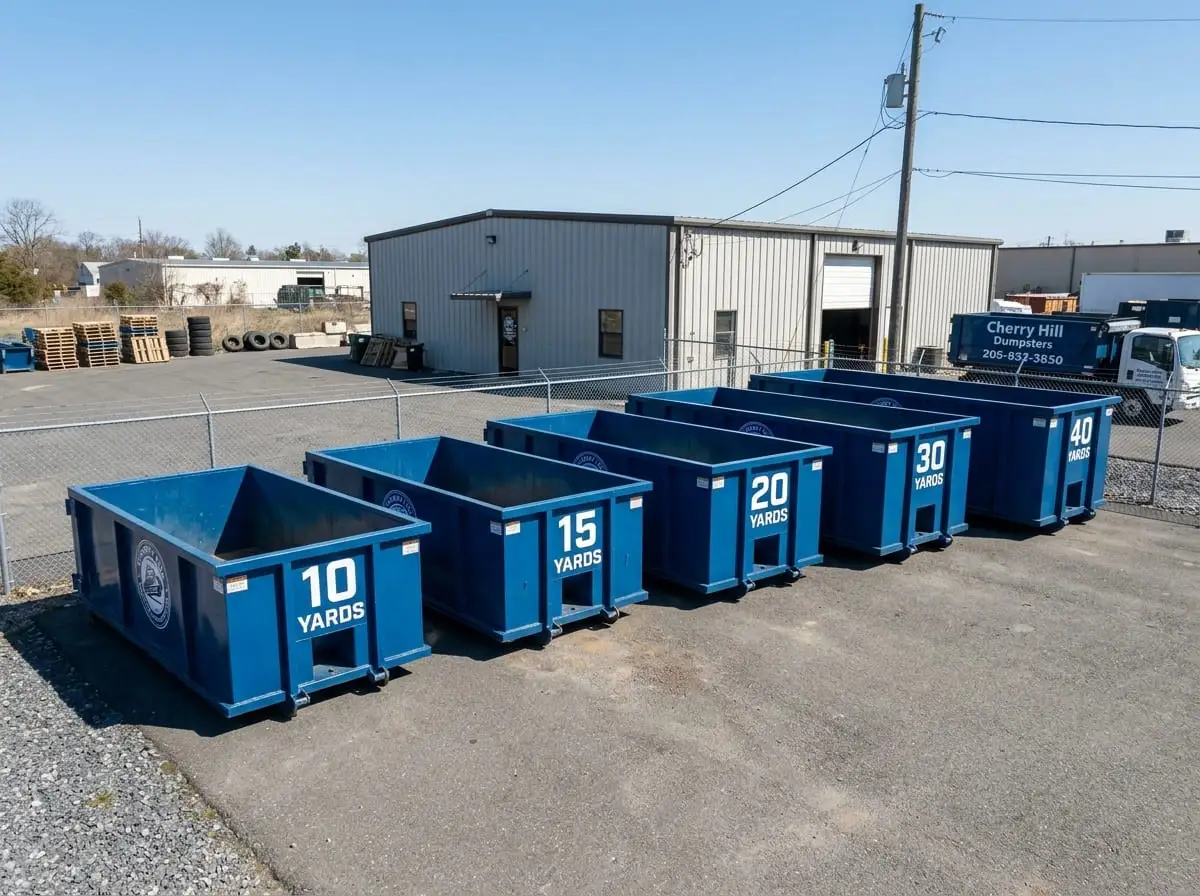
Size is the obvious factor — a 10 yard costs less than a 40 yard. Less obvious is weight: dense material like concrete, brick or roofing shingles can push you toward a smaller, cheaper container than you'd expect, because the weight limit stops you before the volume does. Rental length matters too — a standard 7 to 10 day window is included in most flat rates, with extensions priced honestly rather than penalized. And distance from the yard is real: a Cherry Hill delivery costs less to run than one out toward Lindenwold or Magnolia, purely on fuel and driver time.
The fastest way to a real quote is describing the actual job — what you're clearing, roughly how much of it there is, whether it's dense or bulky, and your address. That gets you a firm, flat price on that same call, not a range that turns into a surprise once the truck is already on your driveway.
Talk to a real person
Call (856) 702-2566 and describe the job. Flat price, stated tonnage allowance, and a delivery window on the same call.
Mon–Sat 7:00am – 7:00pm
From this guide
Disposal, fuel and labor costs across the Philadelphia metro and South Jersey generally run higher than a lot of the country, and that shows up in dumpster pricing the same way it shows up in most local services here.
Distance from our Cherry Hill yard is a real cost factor. A delivery to a farther community like Lindenwold or Magnolia is not priced identically to one in Cherry Hill itself, and we tell you the full number on the phone before booking.
Almost nothing, if you stayed within the agreed size and weight allowance. Going meaningfully over the tonnage you agreed to is the one thing that changes the final number, and we explain that rate before you book, not after.
Keep reading
A straight answer on what's allowed, what isn't, and where the prohibited stuff actually needs to go instead — before it costs you a charge-back fee.
ReadThe honest answer: private-driveway placement almost never needs a permit. Street or right-of-way placement is a different, town-by-town conversation.
ReadThe complete sizing guide: how to pick the right container by matching your debris to the two limits that actually matter — volume and weight.
Read