

Dumpsters for a Cherry Hill Kitchen Remodel
Original 1960s and 70s kitchens are still coming out across Cherry Hill. Here's how to size and sequence the container for one properly.
ReadSizing guide
The complete sizing guide: how to pick the right container by matching your debris to the two limits that actually matter — volume and weight.
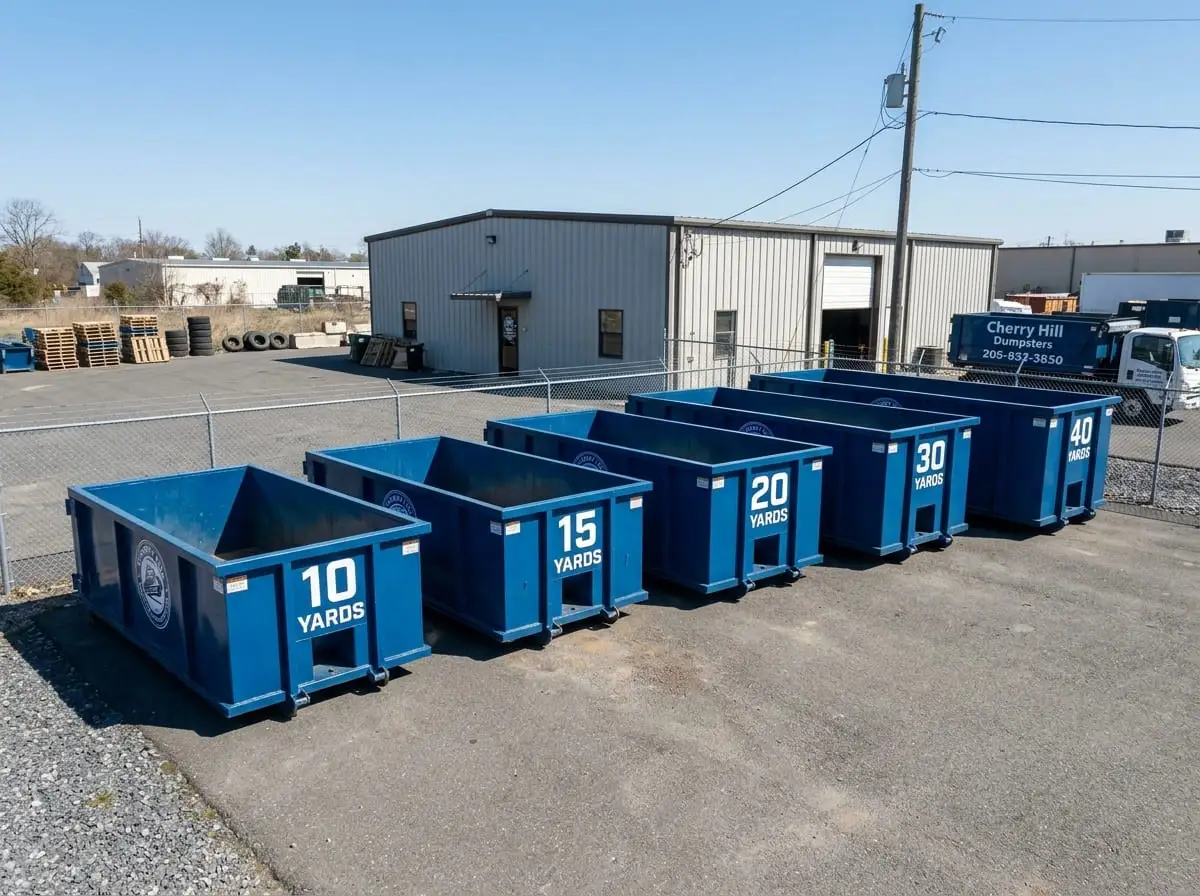
Every roll-off container has two separate limits: how much space it holds, measured in cubic yards, and how much weight it is rated to carry, measured in tons. The single most important sizing skill is figuring out which of those two limits your project will hit first, because the two mistakes cost you in opposite directions.
Bulky, light debris — furniture, cardboard, framing offcuts, general household junk — runs out of space long before it comes close to a container's weight limit. Dense, heavy debris — concrete, brick, roofing shingles, dirt, rain-soaked soil — does the opposite: it hits the weight limit while the box still looks mostly empty. Sizing a container without knowing which situation you're in is the single most common mistake Cherry Hill-area homeowners make.
The right call for concrete, brick, tile or dirt removal regardless of how small the pile looks, and for genuinely small residential jobs — a single bathroom, a small garage, light yard debris. This is also the container that gets the most use on Cherry Hill's older driveway and patio replacement jobs.
Covers a garage plus attic, a mid-size kitchen or bathroom remodel with cabinetry and flooring, or a single-layer roof tear-off on an average home — a common size for the split-level and colonial remodels typical across the township.
Handles whole-house decluttering, a combined kitchen-and-bathroom remodel, a two-layer roof tear-off after a nor'easter, or a mid-size commercial cleanout near the Mall corridor. If you're not sure which size fits and the job is bigger than a single room but smaller than a construction site, this is the safe default to ask about.
New-addition framing and finish debris, whole-home renovations of older Cherry Hill-area houses, larger additions and bigger interior gut-outs all fit comfortably here. This is genuine construction scale — most homeowner remodels do not need to go this large.
Major demolition, full commercial strip-outs and large addition or rebuild sites producing high debris volume. It is a volume container, not a weight-hauling one — dense material like concrete should go in a dedicated low-fill container instead, regardless of project size.
Full interior gut-outs, whole-home renovations and large addition phases often need more than a single load. Rather than force everything into one oversized box, planning a swap-out schedule tied to the project's actual phases usually works better and keeps the driveway clearer.
Describe the material honestly on the phone — what it is, roughly how much, and whether it's dense or bulky. That single conversation gets you a much more accurate size than guessing from a generic project name.
Talk to a real person
Call (856) 702-2566 and describe the job. Flat price, stated tonnage allowance, and a delivery window on the same call.
Mon–Sat 7:00am – 7:00pm
From this guide
The 20 yard, by a wide margin. It comfortably fits whole-house cleanouts, combined remodels and most roofing jobs without the extra footprint of our larger containers.
Dense material — concrete, brick, tile, roofing shingles, rain-soaked soil — is almost always weight-limited. Bulky, light material — furniture, cardboard, brush, general household junk — is almost always volume-limited.
Too small and we can swap it, which costs another haul but is easy to fix. Too large with heavy material is the more expensive mistake, because you pay for a bigger base rate and still hit the tonnage limit early. Describe the job and we will steer you.
Keep reading
Original 1960s and 70s kitchens are still coming out across Cherry Hill. Here's how to size and sequence the container for one properly.
ReadSouth Jersey nor'easters bring down limbs and shingles across the whole county at once. Here's how to move fast without complicating an insurance claim.
ReadSpring is Cherry Hill's busiest cleanout season. Here's what actually fills a container, and how to book before the season fills up around you.
Read