
Spring Cleanout Guide for Cherry Hill, NJ Homeowners
Spring is Cherry Hill's busiest cleanout season. Here's what actually fills a container, and how to book before the season fills up around you.
ReadStorm Debris guide
South Jersey nor'easters bring down limbs and shingles across the whole county at once. Here's how to move fast without complicating an insurance claim.

South Jersey sits in a real winter nor'easter corridor, and Cherry Hill Township's mature, decades-old tree canopy means storm calls here are as much about downed limbs and fence lines as they are about roofing damage. When a significant nor'easter moves through, demand for containers rises across Camden County all at once — knowing how to move fast and size correctly matters more than usual.
Downed limbs and occasionally whole smaller trees, damaged fencing, torn-off shingles and siding, and sometimes water intrusion from a roof or window leak. Most properties see some combination rather than one single category.
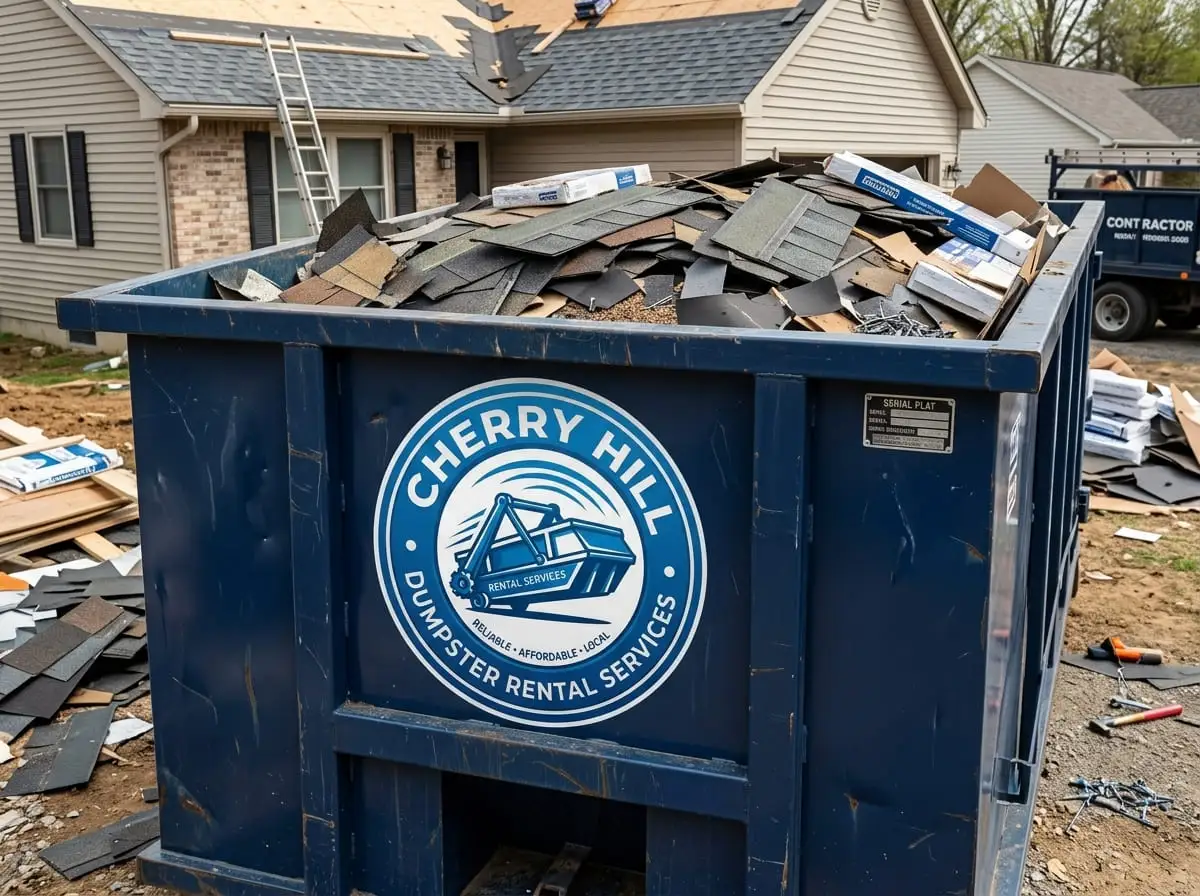
Limbs and brush are bulky but light — they fill a container by volume long before they come close to the weight limit, so size up rather than assume a small container will do based on how the pile looks stacked. Roofing debris is the opposite: dense and heavy, hitting the weight allowance well before the box looks full. If your property has both, we will usually recommend two differently-sized approaches rather than force one container to do both jobs well.
Call as soon as it's safe to assess the damage — not necessarily the moment the storm ends, but once you can walk the property without additional risk from downed limbs or damaged structures. We prioritize jobsite-blocking situations and clear safety hazards first when a regional event has everyone calling at once.
If you're filing a claim, the adjuster's job is easier when damage categories are documented and, where practical, kept separate — roofing debris in one load, structural damage in another, yard waste in a third. Photograph everything before it goes in the container. Ask us about scheduling more than one container if your damage genuinely spans multiple categories and you want to keep the paper trail clean.
Standing water or an active leak needs a remediation service, not a dumpster, as the first call. Anything near a downed power line is a utility company call before it's anyone else's — do not approach it, and do not expect a dumpster delivery near it until the utility has cleared it.
Once the urgent debris is cleared, a second, calmer pass often turns up additional damage — a compromised section of roofing, a fence line that needs full replacement rather than a patch. A standard rental window, or an extension if you ask for one, covers that second pass without a rush.
Talk to a real person
Call (856) 702-2566 and describe the job. Flat price, stated tonnage allowance, and a delivery window on the same call.
Mon–Sat 7:00am – 7:00pm
From this guide
As fast as scheduling allows, with priority given to jobsite-blocking and safety-related calls. Call as soon as it's safe to assess the damage — demand across the county rises together after a regional storm.
If you're filing an insurance claim, yes where practical — roofing, structural and yard debris in separate loads, photographed before loading, makes the adjuster's job easier.
It depends on the mix. Pure yard debris (limbs, brush) needs more volume than weight; roofing damage needs a weight-aware size. Describe what's down and we'll size it.
Keep reading
Spring is Cherry Hill's busiest cleanout season. Here's what actually fills a container, and how to book before the season fills up around you.
ReadRoofing debris is heavier than it looks. Here's how to size correctly by layer count, and time delivery around a roofer's schedule.
ReadClearing a long-owned Cherry Hill family home is rarely a job you can size on the first call. Here's how to plan it without rushing the process.
Read